
What Is a Bike Fit? What to Expect and When You Need One

A bike fit is more than setting saddle height or plugging a few body measurements into a formula. At its core, a bike fit is about creating the best relationship between you, your bike, and the way you actually ride.
Whether you’re totally new to cycling, training for your first triathlon, chasing marginal gains for your next race or simply trying to get more comfortable on your bike, a good fit starts with the rider. Your goals, mobility, experience, the way you ride and any discomfort you’re experiencing all matter before a single bolt is turned.
So what actually happens during a bike fit—and when should you consider having one?
What is a bike fit?
A rider-first bike fit is a collaborative process. We look at how you sit, pedal and support your body on the bike, talk about what you're trying to accomplish, and work with you to make adjustments that create a position you can comfortably and effectively sustain.
That word—sustain—matters. A position that works for five minutes in a fit studio isn't necessarily a good position for a two-hour ride, a century or 180 km followed by a marathon.
It’s important to know there isn’t one universally “correct” position for every rider. Numbers and measurements can provide helpful information, but they don’t replace experience, observation and context. The goal isn’t to make you look like somebody else on a bike—the goal is to make the bike work for you.
Why get a bike fit?
Many people think bike fits are only for high-performance riders or only for solving a problem. In reality, there are a lot of reasons to get fit:
- You're considering buying a bike and want to know what will fit before choosing a model or size.
- You’ve bought a bike and want it setup properly for you.
- You’re experiencing discomfort (pain, numbness, hot spots, saddle soreness, etc.).
- You’re changing equipment (aerobars, saddle, shoes/cleats, handlebars, stem, etc.).
- You’re moving from road cycling into triathlon.
- You want better aerodynamics or performance without sacrificing sustainability.
- Your body, fitness, flexibility, riding volume, or goals have changed.
One key point: you don’t need to have a problem to benefit from a bike fit. A fit can help identify potential issues before they become bigger problems, improve efficiency and help you feel more comfortable and in control of your bike.
What happens during a bike fit?
While every fitter has their own tools and workflow, a high-quality bike fit is usually a repeatable loop of observe → adjust → ride again → reassess. It’s a process, not just a set of measurements. And it’s not just about the equipment we use in the bike fit process. It’s about the conversation we have with you — the questions we ask and the answers you give us.
1) Start with the rider
A fit should begin with a conversation and a quick rider assessment. Expect questions about:
- Goals (comfort, performance, aerodynamics, injury management, etc.)
- Type of riding and typical ride duration
- Race or ride distances
- Experience level
- Current discomfort or recurring issues
- Relevant injury history
- Mobility and range of motion
- What you like about your current setup
- What you’d like to improve
This is where the most important philosophy shows up early: it starts with you.
2) Look at how you ride on the bike
Next, the fitter will assess how you naturally ride—rather than forcing you into a position just because a chart says you “should” be there. Depending on your setup and goals, they may look at:
- Saddle height and fore/aft position
- Reach (how far you’re stretched to the bars)
- Stack/bar height (how high the bars are relative to the saddle)
- Hip and knee angles
- Foot and cleat position
- Hand and arm position
- Weight distribution and stability
- Pedaling mechanics
- Comfort and ability to sustain the position
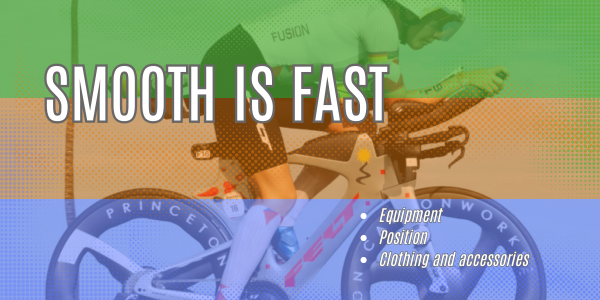
For triathlon fits, there’s another major consideration: the aero position. Armrest and extension setup, elbow and shoulder support, head position and overall stability all matter. The goal isn't simply to get as low as possible. It's to find the fastest position you can effectively sustain. That means balancing aerodynamics with comfort, stability and power—and ultimately getting off the bike ready to run.
3) Make changes, then re-check
From there, adjustments are made and tested. Sometimes the answer is a position change; sometimes it’s equipment. A fit may involve changes such as:
- A different saddle
- Stem length/angle changes
- Handlebar width changes
- Crank length changes
- Aerobar extensions and armrest position changes
- Cleat/shoe setup tweaks
The guiding principle is consistent: choose equipment to support the position—not a position to accommodate equipment you’ve already decided you want.
Sometimes a small adjustment solves the problem. Sometimes the bike simply needs a different component. And occasionally a fit reveals that the bike itself isn't an ideal match for the rider.
Bike fit isn’t one-size-fits-all
Two riders of the same height can need very different positions. Differences in leg/torso proportions, mobility, strength, experience, injury history, goals, and riding style can all change what “good” looks like.
Technology and measurements can be incredibly useful, but interpretation matters. Numbers provide information. The rider provides the context.
Road bike fit vs. triathlon bike fit (quick overview)
Road and triathlon fits share a foundation, but the goals can be quite different.
A road fit balances comfort, power, handling, control, and efficiency across multiple hand positions. A triathlon fit adds a major variable: aerodynamics, while still needing to preserve sustainable power and support the run afterward.
Same athlete. Different bike. Different purpose. Potentially very different position.
We’ll explore those differences in more detail in our guide to road versus triathlon bike fitting.
What about a bike fit before buying a bike?
A fit doesn’t have to begin with a bike you already own. In fact, a pre-purchase fit can help answer more than what size? It can help determine what type of bike best suits the rider and the riding they want to do.
Road bike with aerobars or dedicated triathlon bike? Endurance road, aero road or gravel? Sometimes the differences in geometry are subtle, but those differences can have a significant effect on whether a bike can deliver the position you need.
Once we understand your position, goals and intended riding, we can determine which bikes and sizes can actually accommodate that position.
This is where “position first” matters. Rather than asking, “I love this bike—what size should I buy?” the better question is: What position do I need, and which bikes can deliver it?
Bike size labels alone don't tell the whole story. Geometry differs between brands and models, and two bikes carrying the same size designation may fit very differently. Establishing the rider's position first lets us evaluate bikes based on whether they can actually deliver that position—not simply whether the size printed on the frame sounds right.
Can a bike fit change over time?
Yes—often. Bodies change, mobility changes, fitness changes, injuries happen and resolve, and goals shift. Even an established position may need revisiting as riding volume, race distance, equipment or goals change.
A fit from years ago isn’t automatically your best fit today.
How do you know when your bike fit is right?
A “right” fit isn’t always the one that matches a textbook number. It’s the one that lets you do what you’re trying to do on the bike:
- Comfortable enough to sustain.
- Stable and confident.
- Able to produce power.
- Appropriate for the type of riding.
- Aerodynamically effective when that’s part of the goal.
Ultimately, it should work on the road—not just look good on a screen.
Element bike fitting
Bike fitting at Element isn't limited to one type of rider or one type of fit. We work with road cyclists and triathletes, new riders choosing their first performance bike and experienced athletes refining an established position. A fit might be about comfort, setting up a new bike, adding aerobars, choosing a saddle, solving a positioning problem or finding aerodynamic improvements.
Thinking about a bike fit? Start with a conversation. Tell us what you ride, what you’re trying to accomplish, and what isn’t working—and we’ll help determine what kind of fit makes sense.


Comments