
Mindset Lessons from Jan Frodeno Every Triathlete Can Use - Part 1, The First Five
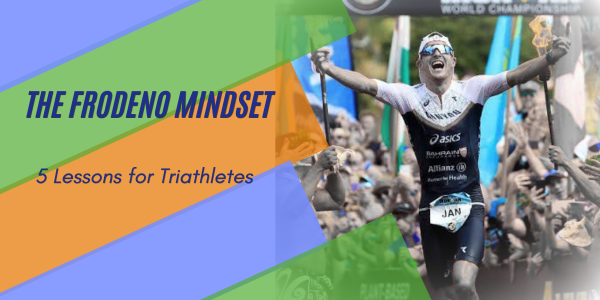
Five Mindset Lessons
If you've been around triathlon for a while, you've probably heard of Jan Frodeno. If you're newer to the sport, here's why athletes still pay attention when he speaks.
Jan is one of the most accomplished triathletes in history:
- Olympic Gold Medalist (Beijing 2008)
- Three-time Ironman World Champion
- Two-time Ironman 70.3 World Champion
- Former Ironman world record holder
More importantly, he has experienced every side of endurance sport: victories, setbacks, injuries, comebacks, race-day mistakes and the mental battles that every athlete faces.
Recently, Jan hosted an "Ask Me Anything" session with athletes preparing for Ironman Hamburg. While the questions covered everything from jet lag to marathon pacing, several themes stood out.
Here are the lessons that resonated most with us at Element.
1. Trade Fear for Curiosity
One athlete asked about race-day nerves and self-doubt.
Jan's advice wasn't to eliminate fear.
Instead, he suggested becoming curious.
Be curious about what you can achieve.
Be curious about how well your training prepared you.
Be curious about what the day will teach you.
That's a powerful mindset shift. Fear focuses on what might go wrong. Curiosity focuses on discovery.
For many athletes, especially first-timers, this simple reframe can take enormous pressure off race day. Looking back, it's a mindset I could have used during some of my first long-distance triathlons. Nervous energy without direction often turns into anxiety. For me, that meant fitful sleep or sometimes no sleep at all. Curiosity shifts the focus from fear to possibility and can transform anxiety into anticipation.

2. You'll Never Feel Completely Ready
Jan admitted something that many athletes don't expect to hear from a world champion:
"You've never done enough."
Then he immediately followed with:
"But you've done everything you could."
Every athlete reaches a point before a big race where they wonder if they should have done one more long ride, one more swim, or one more brick workout.
The reality is that nobody arrives at the start line feeling perfectly prepared. And if they to think they're perfectly prepared, they're either fooling themselves or they're trying to convince themselves. Only once or twice have I arrived at an Ironman race feeling nearly ready. Even then, I felt there was still potential for more or better prep if only I'd had more time.
Those "if only" thoughts aren't productive. At some point, preparation ends and trust takes over.

3. Turn Problems Into Puzzles
This was one of our favorite insights.
Jan described long-distance racing as a puzzle to solve.
Not something scary.
Not something impossible.
Just a challenge that requires problem-solving.
This mindset works well beyond racing.
Flat tire? Puzzle.
Nutrition issue? Puzzle.
Missed workout? Puzzle.
Bad weather? Puzzle.
When athletes view challenges as problems to solve rather than threats to fear, they often perform much better.
One of my training partners years ago, Joe, once said "I try to think of everything that can possibly go wrong and try to find a solution". That was one of his pre-race tasks and that is only one potential puzzle that racing poses. Joe's approach might sound excessive, but the reality is that you can't plan for everything.
The real skill is learning to solve problems as they arise. That's one of the most valuable tools any athlete can develop.

4. You Are More Resilient Than You Think
Jan shared a story from his first Ironman.
He suffered three punctures.
He cramped almost immediately after getting off the bike.
In his words, almost everything went wrong.
Yet he still finished.
His takeaway?
"You will be more resilient than you think you are."
Most athletes discover during long-course racing that they are capable of handling far more discomfort, adversity, and uncertainty than they ever imagined. The body is often stronger than the mind believes, and race day has a way of revealing strengths you didn't know you had.

5. Everybody Experiences Self-Doubt
Several athletes admitted they were nervous about their first Ironman.
Jan's responses were reassuring because they normalized those feelings.
Even elite athletes question themselves.
Even world champions have doubts.
The goal isn't to eliminate uncertainty.
The goal is to move forward despite it.

Final Thoughts On The First Five Lessons
What stood out most from Jan's conversation wasn't race tactics or training secrets.
It was perspective. Frodeno's answers weren't dramatic or motivational in the traditional sense. They were calm, practical, and grounded in experience.
The same athlete who won Olympic gold and multiple world championships still talks about curiosity, resilience, friendships, problem-solving, and managing doubt.
Those lessons apply whether you're racing your first sprint triathlon, your first 70.3, or your tenth Ironman.
As race season approaches, remember:
- You probably won't feel completely ready.
- Something will probably go wrong.
- You'll almost certainly be stronger and more resilient than you think.
And sometimes the best approach is simply to be curious about what's possible. Training builds the foundation, but racing and key workouts are where curiosity lives. They provide an opportunity to discover what all those early mornings, long rides, and challenging sessions have prepared you to do.
For many athletes, that's one of the reasons triathlon is so compelling. It challenges us to test our limits and discover what we're capable of. And even when the outcome isn't what we hoped for, failure is simply feedback. It answers the question that curiosity asked in the first place.



Comments